
Board and panel trolleys are essential pieces of material handling equipment on construction sites, designed to safely transport large sheet materials such as plasterboard. These trolleys help reduce physical strain on workers and lower the risk of material damage while navigating busy or confined work areas. Understanding their role and proper use enhances both safety and efficiency for site teams.
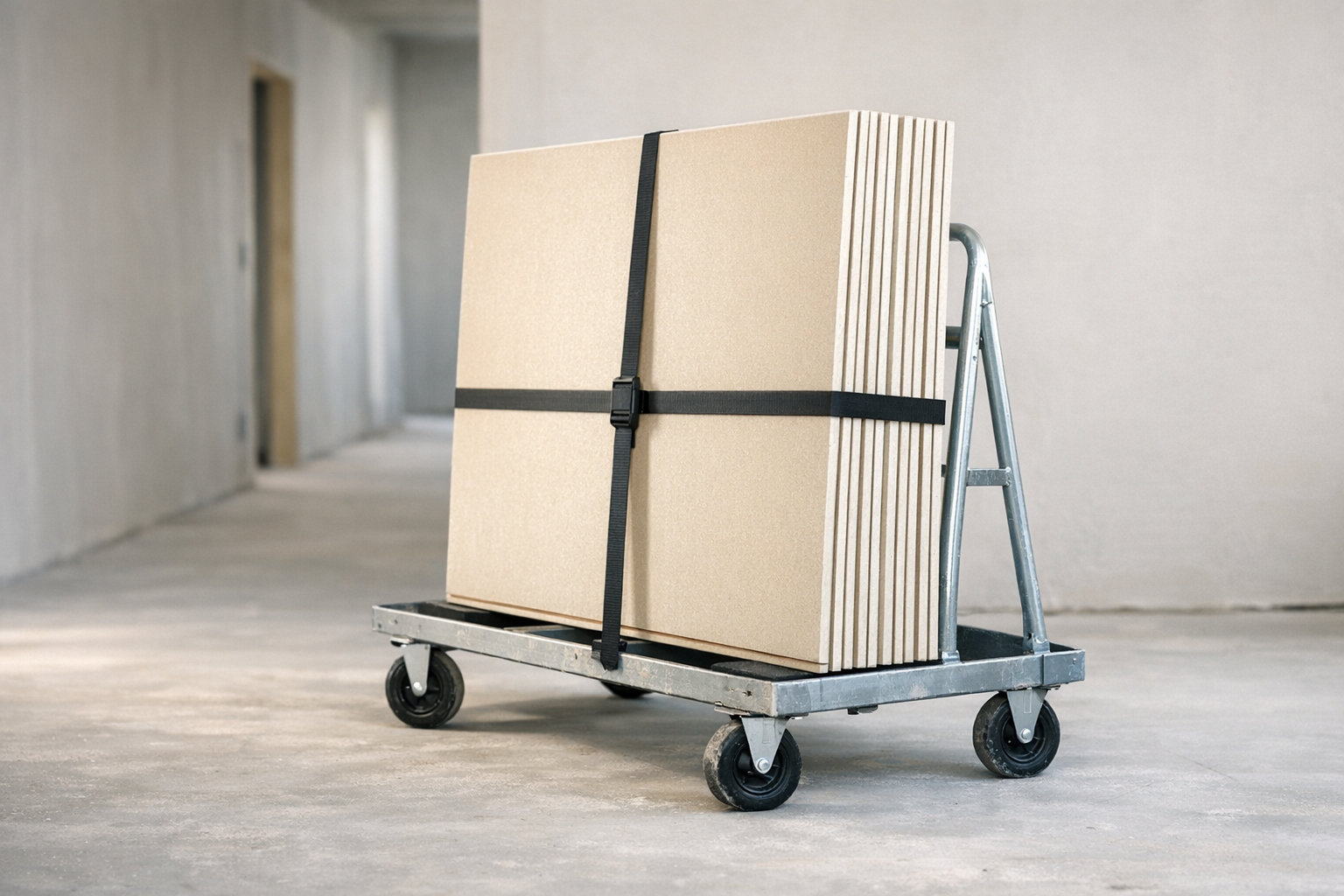
Board and panel trolleys have become standard tools for improving the safety and ease of moving plasterboard and similar materials on building sites. Board and panel trolleys are specifically built for transporting bulky and heavy sheets, offering strong, stable frames and wheels for manoeuvring through tight spaces. By using these trolleys alongside other material handling equipment, construction teams can not only protect themselves from injuries but also avoid costly damage to materials. Their presence on site is a key factor in supporting efficient and safe workflows for tasks involving sheet goods.
How board and panel trolleys operate on site
Board and panel trolleys are designed to carry large sheets upright, allowing materials such as plasterboard to be moved securely and with reduced manual effort. Their robust frames cradle the boards and prevent shifting or tipping, which is an important safety feature in busy or uneven site environments. When selecting board trolleys, teams can match capacity and wheel type to the specific ground conditions and access routes on site.
On site, trolleys are loaded with boards so that the materials remain balanced during transit. This stable design protects both workers and goods by minimising the risk of dropping or knocking materials. The handles and controls on panel trolleys enable precise steering, supporting safe navigation even in crowded or restricted areas. These functions make them an ideal choice for consistently delivering materials where they’re needed during any construction phase.
The versatility of board and panel trolleys extends to various site conditions, from ground floor installations to multi-storey buildings where materials must be moved from delivery points to specific work areas. Many modern trolleys feature adjustable supports and straps that accommodate different sheet sizes and thicknesses, ensuring a secure fit for various material types beyond standard plasterboard, including insulation boards, MDF panels, and timber sheets. This adaptability means that a single trolley can serve multiple purposes throughout a project, making it a cost-effective investment for contractors who handle diverse materials across different job types, and it also complements other material handling equipment used throughout a busy build.
Safety advantages for construction teams
Safety is a central benefit of using these trolleys, as they help prevent many of the hazards associated with manual handling of plasterboard. Lifting and moving large sheets unaided can cause musculoskeletal injuries, including strains or sprains, especially when repeated over time or in awkward positions. Trolleys remove much of this lifting, as materials are simply tilted onto the platform for transport, reducing exposure to such risks, and panel trolleys can help keep the load under control in tight corridors.
The use of board and panel trolleys also keeps hands and fingers away from pinch or crush points that arise when manoeuvring heavy boards through doors or narrow paths. By keeping the load upright and supported, workers have clearer visibility, helping avoid trips, falls, or collisions with site obstacles. This makes material handling quicker and less hazardous, leading to fewer incidents and less strain on the team over the course of a project, particularly when board trolleys are used as intended.
Beyond immediate injury prevention, the consistent use of board and panel trolleys contributes to long-term worker health and wellbeing, which is increasingly recognised as essential to sustainable construction practices. Chronic back problems and joint issues resulting from years of manual handling can lead to early retirement or reduced capacity, affecting both individual livelihoods and industry workforce availability. By investing in proper handling equipment and fostering a culture where workers feel empowered to use these tools without time pressure, site managers demonstrate duty of care that extends beyond regulatory compliance, building team morale and reducing staff turnover in an industry where skilled labour is increasingly valuable.
Minimising material damage with proper handling
Damage to plasterboard and other sheet materials often results from improper lifting, stacking, or dropping during manual transport. Board trolleys and panel trolleys help prevent these issues by supporting the boards securely in transit, reducing the likelihood of chipping or cracking edges. Their platforms are designed to cushion materials and keep them stable, so that sharp corners or rough terrain do not cause breaks or marks that would lead to wastage.
Using dedicated trolleys for plasterboard is especially valuable when moving materials in or out of storage areas and transporting them across uneven floors. Fewer material handling errors mean less downtime to replace damaged goods and lower costs for site managers. Adopting these tools demonstrates a commitment to planning, organisation, and respect for both site safety and valuable construction materials, and it also reinforces the value of reliable material handling equipment.
The financial impact of material damage extends beyond simple replacement costs, affecting project timelines and client relationships when delays occur due to reordering damaged goods. When plasterboard arrives on site in pristine condition but suffers edge damage or surface dents during internal handling, the waste represents not only lost material value but also the environmental cost of manufacturing, transporting, and disposing of unusable sheets. Board and panel trolleys help construction firms meet sustainability targets by reducing material waste, supporting environmental management systems, and demonstrating responsible resource use that increasingly influences tender success and client satisfaction in modern construction procurement.
Role in broader material handling strategies
The benefits of board and panel trolleys become even more significant when they are integrated into overall site procedures for moving and storing materials. Before use, planning safe routes and clearing pathways allows trolleys to travel easily, preventing delays and making material handling more efficient. Assigning roles such as spotters or coordinators strengthens communication and further reduces risk when moving heavy or bulky loads.
Training site teams to use board and panel trolleys alongside other material handling equipment enhances both individual safety and overall site operations. By consistently using best practices and maintaining all trolleys in good working order, construction teams create safer, more productive environments that benefit every phase of a building project, and the same principles apply to wider material handling equipment selection and use.
Regular inspection and maintenance of board and panel trolleys ensures they remain safe and effective throughout their working life, with checks focusing on wheel condition, frame integrity, and securing mechanisms that might wear over time. Establishing a simple maintenance schedule, including cleaning wheels of debris, lubricating moving parts, and replacing worn components, prevents unexpected failures that could compromise safety or cause project delays. Documentation of trolley inspections and repairs also supports health and safety audits and demonstrates systematic risk management, while proper storage of trolleys when not in use protects them from weather damage and extends their serviceable lifespan, maximising return on investment for construction businesses of all sizes.